Category: Bluegrass Music

Bluegrass Music: Discover all things bluegrass! From its rich history and unique sound to the artists, songs, and community that make bluegrass special, this category covers a wide range of topics for fans and players alike. Whether you’re new to the genre or a seasoned bluegrass musician, explore content that dives deep into what makes bluegrass music timeless and inspiring.

  • Introduction to bluegrass music

    Introduction to bluegrass music

    Looking for an introduction to bluegrass? This genre isn’t just music; it’s storytelling at its finest.

    From mournful ballads to lively jigs, there’s something inherently captivating about bluegrass that keeps us coming back for more.

    Unraveling the Roots of Bluegrass Music

    The story behind bluegrass music is as rich and complex as its sound. This genre, a beloved part of American history, weaves together elements from jazz, blues, and traditional Appalachian, Scottish, and Irish folk tunes to create something entirely unique.

    Influences on Early Bluegrass

    Jazz had an undeniable impact on early bluegrass sounds. Its influence can be seen most clearly in the improvisational solos that are a hallmark of many performances – each musician gets their moment to shine with their instrument. The resophonic guitar (or dobro), commonly used for slide playing in blues, was later adopted into some bluegrass ensembles – further evidence of this fusion.

    But let’s not forget about traditional Appalachian mountain music. It played an equally vital role in shaping what we now know as the classic string band style associated with timeless fiddle-and-banjo tunes.

    Pioneers Who Shaped Bluegrass Sound

    If you’re talking about key figures who shaped the development of progressive bluegrass, one name stands out above all others: Bill Monroe. Known widely as “the father,” he laid the foundation for the high-energy ensemble format which became an integral part of future country music studies. His powerful mandolin chops were matched only by his dedication towards preserving the authentic ‘old time’ music essence, thereby making him a revered figure within international bluegrass music association circles today.

    Moving forward, the Stanley Brothers duo (Carter Stanley & Ralph Stanley) brought new dimensions to existing arrangements through their close-harmony duet vocal style, popularizing harmony singing across the Appalachians. They left an indelible mark upon the hearts of listeners, leaving a legacy that influences aspiring artists even to this day.

    Last but certainly not least, Earl Scruggs deserves a special mention here too. His innovative three-finger banjo picking technique, famously known as ‘Scruggs Style’, revolutionized the way the world perceived the banjo altogether, bringing a dynamic energy never witnessed before. He teamed up with Lester Flatt, forming the iconic duo “Flatt & Scruggs” after his departure from the ‘Blue

    Pioneering Bands in Bluegrass

    Bluegrass music is deeply rooted in the rich traditions of jazz, blues, and mountain music. The genre was shaped by a handful of pioneering bands that left an indelible mark on country music studies.

    Contributions of Bill Monroe

    Bill Monroe, played a significant role in crafting what we now recognize as bluegrass. Born into a family steeped in string band tradition, his innovative approach combined elements from various musical genres to create something unique.

    The fast tempos and intricate solos featured during performances by his band, The Blue Grass Boys, set them apart from others at the time. Their distinct sound came about through blending resophonic guitar with fiddle-and-banjo tunes passed down over generations.

    Influence of Stanley Brothers

    Ralph and Carter Stanley were another influential duo who offered their own rustic interpretation of this genre under the name – ‘Stanley Brothers’. They seamlessly fused old-time music traditions with their distinctive vocal harmonies, resulting in soulful ballads reminiscent of hillbilly styles.

    A perfect example would be timeless classics like ‘Rank Stranger’ which still resonate among audiences today at every Blue Ridge center or international bluegrass festival around the world.

    Impact of Flatt & Scruggs

    Lester Flatt and Earl Scruggs, known for their work alongside Bill Monroe before forming ‘Flatt & Scruggs’, added a new dimension to banjo playing. Known particularly for Earl Scrugg’s three-finger technique – “Scrugg’s style” picking became synonymous within the progressive bluegrass community worldwide.

    An iconic tune showcasing the same is ‘Foggy Mountain Breakdown’, which continues to serve as inspiration even today among musicians learning to play progressive bluegrass either solo or jamming together at gatherings hosted by the International Bluegrass Music Association (IBMA), representing raw-edged traditional bluegrass.

    Popular Bands from the 1950s

    In the ’50s, bluegrass music had a plethora of gifted performers. From Reno & Smiley to Jimmy Martin, Jim & Jesse, and Osborne Brothers – each band brought something unique to the table.

    Unique Style Elements Introduced by Reno & Smiley

    Reno & Smiley were a dynamic duo who left an indelible mark on bluegrass music’s history. Don Reno’s banjo playing skills added a fresh twist while Red Smiley’s baritone vocals gave their sound depth.

    Influence of Jimmy Martin on the Country Spectrum

    Jamming away at his guitar, Jimmy Martin, often referred to as “The King of Bluegrass,” made waves across stages nationwide. His energy, coupled with progressive bluegrass vibes, set him apart from other artists during this era.

    Martin had a knack for blending traditional mountain tunes passed down through generations into modern performances that resonated well with audiences, shaping what we now know as progressive bluegrass.

    A Nod to the Harmonies of Jim and Jesse

    The McReynolds brothers, better known as Jim and Jesse, rose up the ranks within international bluegrass circles thanks largely to their flawless vocal harmony arrangements. These refined harmonies combined beautifully with cross-picking mandolin technique showcased by brother Jesse, while elder sibling Jim strummed along rhythmically on his guitar, echoing sounds reminiscent of Lonesome River Band-styled compositions.

    Ode to Osborne Brothers’ Contribution Towards Countryside Bluegrass

    Bobby and Sonny Osbourne revolutionized how people perceived resophonic guitars (Dobro) when they formed The Osborne Brothers Band. They seamlessly incorporated modern tones into old-time music traditions, just like Vern Williams did, representing raw-edged traditional bluegrass.

    This balance between tradition and innovation led them towards creating new dimensions within countryside-themed string band settings, which helped push boundaries further, expanding the scope for future artists.

    Post 1960’s Evolution

    The post-60s era brought about a radical transformation in the bluegrass music scene. This period witnessed an emergence of new bands and saw established artists continue to create compelling work.

    All-Star Band Trend Sparked by Tony Rice with ‘Blue Grass Album Band’

    A key player who stirred things up was none other than progressive bluegrass legend Tony Rice. He shook the genre with his creation of the Blue Grass Album Band – uniting skilled musicians from various backgrounds bonded by their shared love for traditional bluegrass.

    This move set a trend that future groups would emulate, marking significant strides in how we understand and appreciate this time-honored style today.

    Ralph Stanley’s Legacy Post Carter Stanley

    In parallel, existing icons like Ralph Stanley were leaving indelible marks during this epoch too. After losing his brother Carter in 1966 – half of the iconic Stanley Brothers duo, he faced what seemed like an insurmountable challenge: carrying forward without him.

    Ralph made lemonade. He chose to delve deeper into preserving old-time music traditions within his compositions—a decision that greatly influenced subsequent generations’ understanding and appreciation of these genres. His unwavering commitment ensured classic fiddle-and-banjo tunes passed down through ages remained alive while inspiring young bloods exploring these rich traditions further. His influence is still palpable as newer bands incorporate elements from early country music studies into their unique styles—further testament to Ralph’s enduring legacy.

    Women in Bluegrass

    The bluegrass music scene, historically male-dominated, has been deeply influenced by a handful of exceptional women. Hazel Dickens is one such figure who made her mark in the genre.

    Hazel Dickens and Her Impact on Old School Voice Blending

    Hazel Dickens was renowned for her compelling songwriting skills and powerful singing that brought genuine emotion to bluegrass music. She adopted an unfiltered vocal style which became emblematic of the ‘high lonesome sound’ typically associated with traditional bluegrass.

    This allowed her to resonate profoundly within the community as she used her distinctive blend of old-school vocals to bring these stories alive, influencing future generations of female musicians in this genre.

    Kathy Kallick, Laurie Lewis, and Lynn Morris – Pioneers in Their Own Right

    Influential figures like Kathy Kallick and Laurie Lewis have significantly contributed to shaping the contemporary bluegrass music landscape. Both being multi-instrumentalists introduced innovative elements into traditional tunes while preserving its core essence. Lynn Morris also deserves mention here as one among a few successful women banjo players whose clawhammer style added a unique touch during the 1980s. These artists not only broke gender barriers but also paved the way for more diversity within this field.

    Rhonda Vincent – The Reigning Queen of Bluegrass Music

    A discussion about influential women in bluegrass wouldn’t be complete without mentioning Rhonda Vincent, often referred to as “The Queen of Bluegrass”. Over the years, she has consistently produced chart-topping albums showcasing incredible talent both as a singer and mandolin player despite fierce competition from peers. Rhonda’s success story, punctuated by multiple awards including Grammy nominations, reflects how far we’ve come since the early days when the presence of females was scarce within the musical tradition known primarily for raw-edged hillbilly tunes.

    Current State Of Bluegrass

    Bluegrass music is constantly evolving, with new ideas and interpretations coming out from all directions. With artists constantly pushing boundaries and redefining what it means to be a part of this genre, there’s no shortage of fresh sounds emerging from all corners. One artist who has managed to make her mark in recent years is Alison Krauss.

    The Popularity Gained By Alison Krauss Despite Being More Pop Oriented

    Krauss’s journey into mainstream success hasn’t come without its share of challenges though. She has had to balance staying true to her roots while exploring new musical territories – something she has done exceptionally well as evidenced by her extensive discography that includes numerous commercially successful albums.

    It isn’t just about solo ventures either; alongside Union Station – an accomplished band known for their innovative approach towards string-band compositions, they have been able to create work that resonates within circles like the International Bluegrass Music Association. The result? Timeless mountain music enjoyed by fans worldwide.

    Gospel Vocals Focused Recently By Doyle Lawson

    Apart from those making waves in mainstream circuits, we have musicians such as Doyle Lawson who continue experimenting within genre confines. In his case, he has recently shifted focus towards incorporating gospel vocals into his hillbilly tunes which adds another layer of complexity to old-time songs passed down through generations.

    This shift doesn’t merely demonstrate versatility; rather, it underlines how after seven decades since Earl Scruggs first picked up the banjo inspired countless others to do the same (including Vern Williams representing raw-edged traditional bluegrass). The American art form still evolves while maintaining fidelity to its rich heritage.

  • What is bluegrass music?

    What is bluegrass music?

    Bluegrass is a genre of American roots music that originated in the 1940s in Appalachia. It combines elements of old-time music, country, and blues. Bluegrass is typically played on acoustic string instruments like the banjo, fiddle, guitar, mandolin, and upright bass.

    Some key characteristics of bluegrass music include rapid tempos, unique vocal harmonies, and impressive instrumental solos. The vocals are usually high and lonesome sounding. Common song themes involve stories about rural life, heartbreak, religion, etc.

    Bill Monroe is considered the “Father of Bluegrass” and his band, the Blue Grass Boys, helped pioneer the genre in the mid-1940s. Other influential early bluegrass artists included Lester Flatt & Earl Scruggs, the Stanley Brothers, and Jimmy Martin.

    Bluegrass festivals where fans can enjoy live performances have become popular. Prominent bands today keeping the bluegrass tradition alive include Alison Krauss & Union Station, the Del McCoury Band, and the Seldom Scene.

    While rooted in tradition, bluegrass continues to evolve by blending with other genres. Overall, bluegrass music has a passionate, dedicated following among both musicians and fans. Let me know if you would like me to expand on any part of this summary or if you have any other bluegrass questions!

    Bluegrass music basics

    Bluegrass music, a genre that has touched the hearts of many across generations, originated in the 1940s within the Appalachian region. This unique style is a beautiful blend of influences from various cultures and genres, creating an immersive musical experience.

    • Bluegrass music originated in the 1940s from the music of Bill Monroe and his band the Blue Grass Boys. It combines elements of old-time country, blues, and gospel music.
    • The typical bluegrass band lineup includes acoustic guitar, mandolin, 5-string banjo, fiddle, and upright bass. The music features fast tempos, driving rhythms, vocal harmonies, and impressive instrumental solos.
    • Bill Monroe is considered the “Father of Bluegrass” for pioneering the style. Other important early figures were Lester Flatt, Earl Scruggs, the Stanley Brothers, Jimmy Martin, and Don Reno.
    • Key elements that define bluegrass include instrumental tone, timing/rhythm, vocal harmonies, songwriting, and improvisation. Precise timing and playing “on top of the beat” give bluegrass its energetic drive.
    • Bluegrass themes often focus on rural life, relationships, tragedy, religion. Songwriters try to connect with listeners through honest lyrics.
    • The music requires a high level of musicianship. Playing clean, soulful, and in sync with others is highly valued. Concentrating on the overall band sound is important.
    • Bluegrass has evolved over the decades but retains links to its roots. Some branches fuse it with other genres like jazz and rock to create progressive styles.
    • Passionate arguments occur over defining “true” bluegrass versus more experimental modern forms. But most agree the core is acoustic instruments, harmonies, and driving rhythms.
    • Key challenges are appealing to younger listeners, getting radio play, maintaining energy on stage, songwriting, andbalancing tradition with innovation.

    In summary, bluegrass is an acoustic American roots music built on formal and informal traditions, requiring great skill and feeling to play authentically. It continues to evolve both within and outside the genre’s perceived boundaries.

    Influence of immigrant culture on Bluegrass

    Immigrants from Ireland, Scotland, and England brought with them their rich cultural heritage, including traditional folk tunes. These traditional folk tunes were integral in the development of bluegrass music as we know it today. 

    Bluegrass music also has considerable influence from Africa. The banjo, for instance – one of the defining instruments in bluegrass – was introduced to America by African slaves and later popularized by travelling minstrels. 

    Gospel and Blues Elements in Early Bluegrass

    Apart from European influence, gospel and blues also had a profound impact on early bluegrass. Gospel provided soulful harmonies while blues added depth to lyrical themes often revolving around life’s struggles and hardships – both elements contributing to what came to be known as the “high lonesome sound.” You can hear this distinctive sound clearly in classics like Bill Monroe’s “Mule Skinner Blues”.

    This fusion not only created an entirely new genre but also symbolized unity among diverse communities through shared love for music. It served as testament to how different cultures could come together creating something truly special despite their differences or hardships they faced during those times.

    Bill Monroe: The Father of Bluegrass

    To fully appreciate bluegrass music, however, requires understanding its roots and evolution over time, which brings us to the next important figure in history: Bill Monroe, often referred to as the “Father of Bluegrass.” His contributions towards this beloved genre are immeasurable. 

    Bill Monroe – The Father of Bluegrass

    Bluegrass music owes much of its existence and evolution to one man, Bill Monroe. Bill Monroe, hailed as the “Father of Bluegrass,” left an indelible mark on this genre and launched artists like Doc Watson and Lester Flatt into stardom during the 1950s. His influence extended beyond just creating music; he introduced talented artists like Doc Watson and Lester Flatt into the mainstream scene during the 1950s.

    Bill Monroe’s Debut at Grand Ole Opry Stage

    In 1939, Bill Monroe made his first appearance on the Grand Ole Opry stage, a live radio show that was instrumental in promoting country music across America. This debut marked a significant milestone not only for him but also for bluegrass music. It was here that audiences got their first taste of this unique blend of folk tunes with elements from gospel and blues.

    Introduction of Artists Like Doc Watson & Lester Flatt by Monroe

    Apart from being an exceptional musician himself, Bill had an eye for talent too. He played a pivotal role in introducing artists such as Doc Watson and Lester Flatt to wider audiences during the 1950s. These musicians went on to become legends themselves, further enriching bluegrass with their unique styles.

    Their collaborations resulted in some timeless classics that are still loved by fans worldwide today. For instance, songs like “Foggy Mountain Breakdown” by Lester Flatt continue to be popular among both old-time enthusiasts and new listeners alike.

    To truly appreciate bluegrass music’s depth and complexity, understanding Bill Monroe’s impact is crucial. From his early days performing at Grand Ole Opry to mentoring future stars like Doc Watson & Lester Flatt – every aspect reflects how deeply intertwined he is with this genre’s history.

    In essence, without Bill’s pioneering efforts or keen ability to recognize talent when he saw it – we might not have been able to enjoy many gems within bluegrass repertoire today. So next time you listen to your favorite tune, remember to thank the “Father of Bluegrass” for making it all possible.

    Defining Characteristics of Bluegrass Music

    Bluegrass music is a unique genre with captivating features deeply rooted in the cultural history of the Appalachian region.

    The “High Lonesome Sound” of High-Pitched Vocals

    The distinctive, mournful wail of high-pitched vocals in bluegrass is often referred to as “the high lonesome sound,” and it conveys a powerful emotion that brings life to the music.

    Rapid Tempos and Complex Chord Structures

    Another hallmark of bluegrass music is its rapid tempos and complex chord structures. These elements create an energetic rhythm that drives each song forward and require skillful musicianship to perform effectively.

    Instruments of Bluegrass

    Specific instruments associated with bluegrass include:

    • Mandolin: Known for setting the pace in most songs with its ability to produce fast notes quickly.
    • Fiddle: Often takes on lead melody or harmonizes with other instruments, adding richness and texture to the overall sound.
    • Banjo: Typically played using the three-finger picking style developed by Earl Scruggs, the banjo contributes a driving rhythmic element underpinning all others.

    By combining these elements, bluegrass music creates an unparalleled sonic experience. If you’re interested in learning more about how to play one of these instruments and delve deeper into the world of bluegrass, check out resources like East Tennessee State University’s tutorials.

    Evolution and Spread of Bluegrass Music

    From its inception in the 1940s, bluegrass music has evolved and spread widely, captivating listeners with its fusion of folk, gospel, and blues sounds complemented by high-pitched vocals and intricate chord structures. Its unique sound, blending folk, gospel, and blues with high-pitched vocals and complex chord structures, captured the hearts of audiences worldwide.

    The Rise of Bluegrass Festivals

    In the 1960s, the Bluegrass festival emerged as a new concept that would further popularize the genre. Festivals gave artists a chance to show off their skills while allowing fans to become deeply immersed in the lively sounds of bluegrass. Carlton Haney organized the first-ever bluegrass festival in Fincastle, Virginia, in 1965. This innovative idea quickly spread across America, leading to annual events such as Bill Monroe’s Bean Blossom Festival in Indiana and many others.

    Bluegrass Goes Global

    The popularity of bluegrass did not stop at American borders; it resonated with international audiences too. By incorporating influences from other genres into its traditional roots, bluegrass managed to reach faraway places like Canada and Europe, creating new sub-genres along the way.

    In Canada, for instance, Canadian Bluegrass has been influenced by Celtic traditions due to the large Scottish-Irish immigrant population there while still maintaining the core characteristics of the original genre. Similarly, European countries have embraced this style of music, creating their own versions such as British Bluegrass or Dutch Mountain Music, which blend local folk tunes with classic American bluegrass sounds. Today, you can find thriving scenes dedicated solely to the promotion and preservation of these mixed genres all over the world.

    “The power of unity in diversity” – this phrase perfectly encapsulates the journey of the evolution and spread of bluegrass music around the globe. In spite of the transformations over time, bluegrass music has remained true to its beginnings, reminding us that it is essential to safeguard our cultural legacy while at the same time accepting alteration and growth. So the next time you hear those high lonesome sounds echoing through the hills, remember the story behind them and appreciate how far they’ve traveled to get here.

    Keeping Alive The Spirit Of Traditional Folk Tunes In Modern Times

    Maintaining the traditional sounds of bluegrass in a rapidly changing musical landscape is no small feat, but many organizations are doing just that – not only preserving these tunes, but also encouraging new ideas to keep them vibrant. However, several organizations have taken up this task with great enthusiasm and success. They’re not just preserving the old tunes; they’re also promoting innovation within the genre to keep it fresh and relevant.

    North Carolina Shenandoah Music Trail

    The North Carolina Shenandoah Music Trail has been instrumental in organizing:

    • Jam Sessions: Regular gatherings where musicians play improvised renditions of classic bluegrass songs.
    • Lessons: Workshops led by experienced players who teach participants how to play different instruments used in bluegrass such as mandolin or fiddle guitar.
    • Festivals: Large-scale events featuring performances from well-known artists in the genre along with emerging talents.

    These initiatives provide platforms for both seasoned musicians and newcomers to come together to share their love for this unique musical style.

    East Tennessee State University (ETSU)

    Moving further south on our musical journey brings us to East Tennessee State University (ETSU). Known for its strong commitment towards cultural preservation through education, ETSU offers a comprehensive Bluegrass Old Time & Country Music program. This program is designed not only to teach students about playing techniques but also about history, theory, songwriting, and even recording technology associated with these styles.

    This dedication shown by organizations like North Carolina Shenandoah Music Trail and East Tennessee State University serves as an inspiring reminder of the power of unity and diversity found within the Bluegrass community. Their efforts ensure tradition stays alive, adapting to changing times yet remaining true to its roots, which are steeped in the rich tapestry of sounds brought together by immigrants from Ireland, Scotland, England, gospel, blues influences, and more.

    Their work underscores the importance of maintaining a connection to the past while embracing changes for the future, ensuring the legacy of Bluegrass continues to inspire generations to come. So whether you’re a seasoned musician, a budding enthusiast, or simply someone who enjoys a good tune and time, explore the wonderful world of Bluegrass and see for yourself where the magic lies within those high-pitched vocals, rapid tempos, complex chord structures played out on mandolin, fiddle, guitar, and other traditional instruments characteristic of this heartwarming genre.

  • Bluegrass slang: decoding the genre’s jargon and lingo

    Bluegrass slang: decoding the genre’s jargon and lingo

    Bluegrass music has a unique charm that comes not only from its fast tempos, high-energy playing, and “high lonesome” sound but also from its own distinct language. If you’re new to bluegrass, you might have heard players tossing around phrases like “take a break,” “noodling,” or “potatoes” at a jam session or festival. The bluegrass community has developed a rich slang that connects musicians and fans alike, giving them a way to share musical ideas, encourage each other, and stay in sync through the twists and turns of each song.

    In this post, I’ll break down some of the most common bluegrass terms to help you feel right at home, whether you’re at your first pickin’ party or joining a jam circle. Grab your instrument, get ready to “take it home,” and let’s dive into the world of bluegrass slang!

    Bluegrass slang dictionary

    Ain’t No Part of Nothin: A disapproving phrase Bill Monroe would often use

    Around the Horn: Refers to giving every participant a chance to take a break (solo)

    Bluesy: A song or break with a minor or pentatonic feel, often adding emotional depth. Even though bluegrass is fast, a “bluesy” break can slow things down and add soul

    Boom-Chuck: A common rhythm in bluegrass where the bass provides the “boom” (bass note) on the downbeat, and the guitar or mandolin provides the “chuck” (chord strum) on the off-beat

    Break: A solo section in a song where one instrument takes the lead. Musicians “take a break” to showcase their skills on their instrument while the rest of the band provides backing

    Chop: A rhythmic, percussive strum often played by mandolin players on the off-beat to create a rhythmic “chop” sound. It’s essential to the “drive” of bluegrass rhythm

    Double-Stop: Playing two notes at the same time, common in fiddle playing. Double-stops create a fuller sound and are often used in bluegrass solos

    Drive: The strong, forward-moving rhythm of bluegrass music. A song with good “drive” keeps the tempo and energy up, giving bluegrass its characteristic pulse

    Flatpicking: A style of picking with a flat pick, commonly used in bluegrass guitar playing. Flatpickers are known for their clear, fast picking on acoustic guitar

    Grass Time: Informal timekeeping at bluegrass jams. Jams can go on for hours, often spilling into the early morning. “Grass time” is flexible and relaxed

    High Lonesome Sound: The signature vocal style of bluegrass, characterized by high, mournful singing, often with tight harmonies

    Hot Licks: Fast or impressive series of notes played in a break. A musician with a lot of “hot licks” is often highly skilled at improvisation

    Jam: A casual gathering of musicians where they play through songs and take turns leading or taking breaks. Jams are a staple of the bluegrass community

    Kickoff: The instrumental intro to a song, usually a short phrase to set the tempo and give a hint of the melody

    Mash & Drive: “Mash” usually means heavily accenting certain beats over others whereas “Drive” refers to maintaining consistent pressure throughout all four beats in every measure, creating relentless momentum characteristic of classic bluegrass tunes

    Noodling: Playing around on an instrument without following a specific song or pattern, often done while warming up or just messing around

    Pickin’ Party: A get-together where musicians play music for fun, often with food and socializing. Pickin’ parties are an essential part of the bluegrass community

    Picky Fingers: A term for a skilled banjo player with quick, precise fingers. “Picky fingers” also refers to the technique of picking single strings quickly

    Potatoes/Taters: A fiddle kick-off that sets the tempo using a shuffling beat

    Risers: Scruggs-Keith banjo tuners

    Roll: A pattern of picking strings, typically on the banjo, that gives bluegrass its rhythmic, flowing sound. Rolls are essential for the bluegrass banjo

    Run: A sequence of notes that leads into or out of a chord. Runs are often used to transition between chords or add flair to a solo

    Sunny Side Up: Something Jimmy Martin would call out during shows when asking sound engineers for more high end on his vocal mic

    Take It Home: A cue signaling that they’re wrapping up their solo and the chorus is coming back around

    Tater-Bug: A European-style mandolin with a rounded back (like a lute)

    Turn-Around: A short musical phrase that occurs at the end of a verse or chorus and leads back to the beginning of the song, a new verse, or the next solo section

    Turn it Around: Means to revisit certain parts of songs – often instrumental breaks – thereby creating variety through repetition

    Woodshedding: Practicing intensively on an instrument, often alone. When musicians “go to the woodshed,” they’re putting in focused practice time to improve

  • History of Bluegrass Music

    History of Bluegrass Music

    Bluegrass is a style of American folk music known for its high, lonesome sound. The genre developed in the Appalachians in the 1940s, largely led by mandolin player Bill Monroe – known as the Father of Bluegrass. Historically, bluegrass music incorporates melodies of traditional folk songs from Scotland, Ireland, and England, played in an American Appalachian fiddle style. 

    Often considered a form of country music, bluegrass songs are generally characterized by high vocal harmonies and specific instrumentation. Bluegrass is almost exclusively performed on guitar, fiddle, banjo, mandolin, and standup bass, with the occasional appearance of harmonica, accordion, dobro, and other various string instruments.

    Basics

    Bill Monroe is widely credited as the “Father of Bluegrass,” combining elements from traditional Appalachian string bands and African-American musical traditions. Monroe’s innovative use of the mandolin, coupled with high-energy performances and tight vocal harmonies, set the foundation for the genre.

    Monroe’s 1945 collaboration with banjo player Earl Scruggs, who popularized the three-finger picking style, marked a key turning point in bluegrass history. This unique combination of instruments—mandolin, banjo, guitar, fiddle, and upright bass—solidified the bluegrass sound, creating a hard-driving, high-tempo musical experience.

    Over time, bluegrass incorporated influences from other genres like jazz, blues, and even pop music, leading to variations such as “newgrass.” In the 1950s, rock and roll overshadowed bluegrass, but the genre experienced a revival in the 1960s, partly thanks to festivals and recordings that introduced it to new audiences.

    Bluegrass festivals help keep the tradition alive, with performers continuing to innovate while honoring its roots. The genre’s adaptability and its foundation in both European and African musical traditions helped it maintain a lasting presence in American culture.

    Old-time music as a precurser to bluegrass

    American old-time music has deep roots in rural traditions that blend European and African influences. This style of music, largely developed in the Appalachian region, emerged from the folk traditions of British, Scottish, and Irish immigrants, as well as West African rhythms brought by enslaved peoples.

    Over time, different regions of the U.S. developed their own styles, creating a rich tapestry of sound and tradition. Traditional folk tunes were passed down through generations American families, preserving their distinct musical styles. Geographic isolation of the Appalachian area allowed these traditions to remain largely unchanged in local culture.

    By the late 1800s, as railroads and recorded music spread, Appalachian music began incorporating vaudeville, African-American blues, and minstrel tunes. This blending of styles led to the creation of new genres, including “Old Timey” music, which many consider a precursor to bluegrass and early country music.

    Old-time music was Initially played for local entertainment and dances, and became a central part of community life in rural America long before the advent of radio and recorded music. Its instrumentation, which includes the fiddle, banjo, and other stringed instruments, was heavily influenced by the diverse cultural backgrounds of the early settlers.

    The introduction of recording technology in the early 20th century helped popularize the style, with record companies marketing the music as “hillbilly” or “old-time tunes.” These recordings, made for and by rural Southern audiences, documented traditional fiddle tunes, ballads, and camp meeting hymns, preserving them for future generations.

    Old-time music is focused on group participation, with all musicians playing together in unison rather than taking turns with solos. This participatory nature makes old-time music more social, as it is often played in informal settings such as jams and square dances.

    The tradition of old-time music continues to thrive today. Festivals, such as the Appalachian String Band Festival in West Virginia, draw thousands of musicians and fans each year. These events offer opportunities for musicians to compete, perform, and most importantly, to jam with others in informal settings.

    The fiddle in the USA

    Scottish and Irish immigrants played a key role in bringing fiddles and traditional fiddle tunes to the United States during the colonization of the Eastern region, particularly in the Appalachian areas. These immigrants, often settling in rural enclaves of places like western Virginia, carried their violins (or “fiddles”), which became central to the music of the region.

    Their lively tunes, often passed down orally, evolved into what is now recognized as American folk and bluegrass music, blending their Celtic melodies with new influences in their adopted homeland.

    The banjo in the USA

    At the same time, African Americans brought the banjo to the U.S., a significant cultural contribution from West Africa. Enslaved Africans introduced the banjo to the southern plantations, where it became a key instrument in early African American music.

    Originally, these banjos were made with gourd bodies and animal skins. Over time, the banjo became widely adopted in American music, contributing to the development of genres such as old-time music and bluegrass, intertwining with fiddle tunes and creating a unique blend of musical traditions.

    The mandolin in the USA

    The mandolin became a key instrument in American music as it circulated throughout the Appalachian region. In the early 20th century, mandolins were often a cheaper, second-hand alternative to guitars, which were beginning to gain popularity.

    As guitars gained prominence in the 1930s, mandolins became integral to traditional string bands, blending with fiddles and banjos to create the distinct sound of bluegrass. The mandolin’s bright tone and ability to play fast-paced melodies made it an ideal addition to these evolving musical genres.

    martin guitar

    The guitar in the USA

    The introduction of the steel-string guitar can be attributed to German luthiers, such as C.F. Martin, who brought their craftsmanship to Pennsylvania in the early 1800s. Martin’s innovations, particularly in the design of the steel-string guitar, provided greater volume and a brighter tone, which appealed to musicians in folk and bluegrass music.

    By the 1930s, the steel-string guitar had become a staple of American music, especially in rural and Appalachian regions, contributing to the development of country, folk, and eventually, bluegrass music.

    The double bass in the USA

    The upright acoustic bass, or double bass, made its way to the United States in the 19th century, brought by European immigrants. Originally used in classical orchestras, the instrument began to gain popularity in jazz, folk, and country music in the early 20th century.

    In the 1940s, the upright bass became a foundational instrument in bluegrass, country, and early rock and roll, thanks to its deep, resonant tone. Players like Bill Monroe’s bassist, Cedric Rainwater, helped establish its central role in the evolution of American roots music.

    The Role of Technology in Popularizing Bluegrass Music

    Bluegrass owes much to the technological advancements that have shaped its evolution. From phonographs to radios and beyond, these innovations have played an integral role in bringing bluegrass from rural communities into homes across America.

    Invention of the Phonograph: A Game Changer for Bluegrass

    The invention of the phonograph by Thomas Edison was more than just another scientific breakthrough; it revolutionized how people experienced music. For genres like bluegrass which originated within close-knit regional communities, this invention offered a platform for their unique sounds to reach far-flung audiences.

    This newfound ability didn’t merely broaden listenership but also democratized access to diverse musical forms previously confined due to geographical boundaries or socio-economic constraints. It’s no exaggeration then when we say that without Edison’s innovation, the course of our beloved bluegrass would’ve been drastically different.

    Radios Bring Bluegrass Nationwide

    No sooner had the Phonograph taken root than along came another marvel – Radio Broadcasting. This technology offered free entertainment right out of the box once purchased, making it particularly appealing during tough times like The Great Depression. These Radios brought different types of music to American households, including our cherished bluegrass which till then remained largely unknown or inaccessible due to its regional nature.

    Radiosets, with their capability to broadcast shows nationwide, played a pivotal role in propelling bluegrass to national prominence. Country-themed radio programs, such as WSM’s Grand Ole Opry, became immensely popular platforms regularly featuring prominent figures within country and bluegrass circles, thus helping spread awareness about this genre amongst a wider audience base.

    Beyond home music players, it was perhaps radio that had an even greater impact on promoting bluegrass across America. With its advent during the 1920s came new opportunities for musicians like Bill Monroe who could now reach audiences far beyond their local communities through live performances aired by stations such as WSM studios.

    Radios became household items allowing people access to diverse types of music without needing physical copies or attending concerts personally. This widespread accessibility via radio meant listeners could enjoy high-quality performances within their comfort zones.

    Beyond Radio broadcasting, the next leap came from television. During the 1950s, many variety shows aired featuring established acts performing hit songs. This combination led to a golden era for country and blues, witnessing exponential growth both in terms of listenership as well as the number of musicians adopting this style.

    Bill Monroe – The Father Of Blue Grass Music

    We cannot overlook the contributions made by Bill Monroe, considered the father of this genre. He formed his band, “The Monroe Brothers,” during the 1930s, establishing himself as one among the pioneers shaping the future course for this genre. His style included the use of acoustic instruments along with distinctively high vocal harmonies, which have become defining characteristics commonly found among future Bluegrass bands.

    Acoustic instruments and high vocal harmonies

    Incorporating songs using acoustic instruments wasn’t just an aesthetic choice but rather a strategic decision taken by Monroe, who wanted to create a unique sound setting his band apart from others. Most importantly, his choice of incorporating high vocal harmonies set a standard followed by many subsequent Bluegrass bands. These distinctive elements can still be heard in the works of contemporary artists today, reflecting the lasting legacy left behind by Monroe and his band.

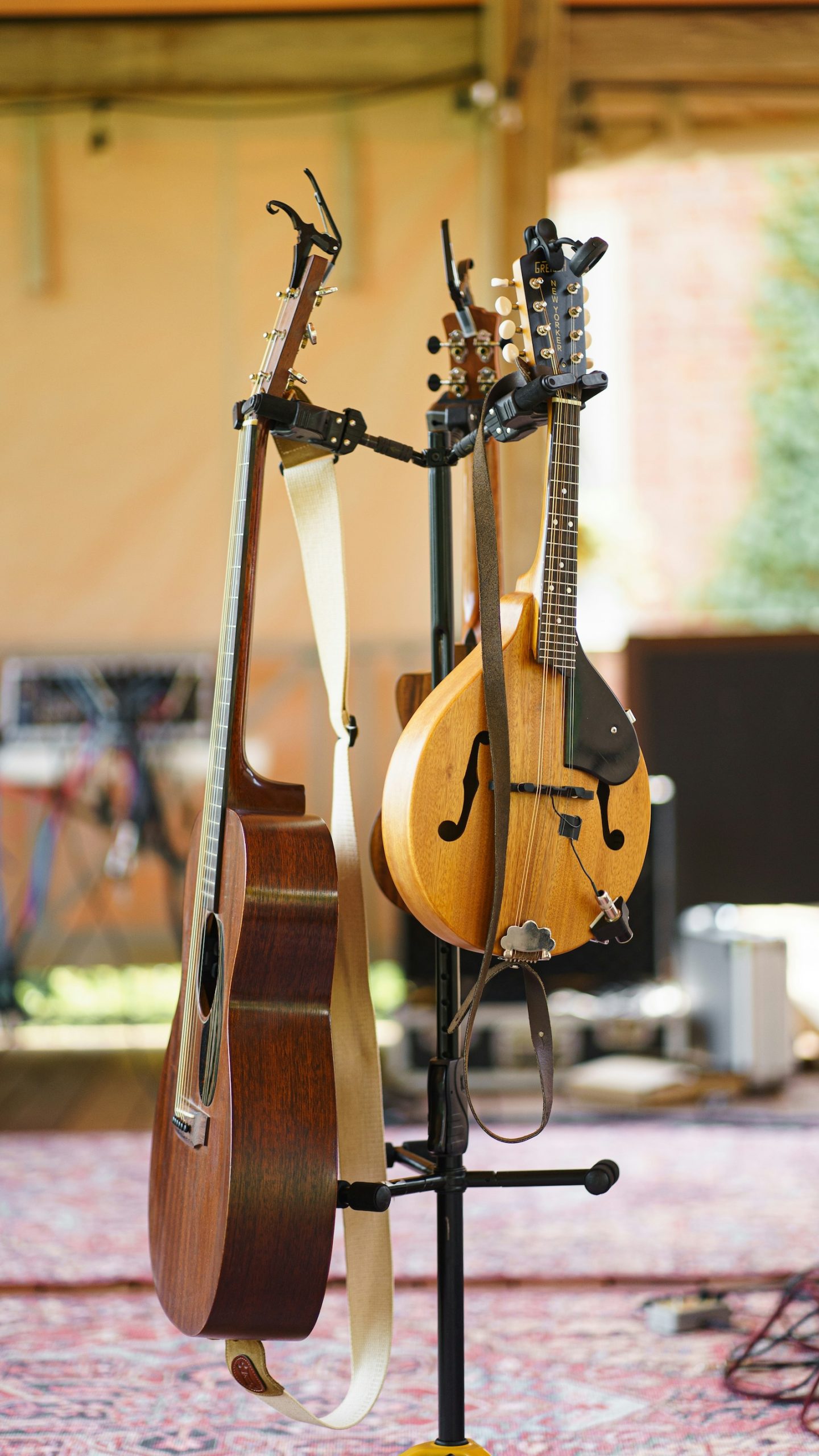
    guitar and mandolin hanging on stand

    The Evolution and Influence of Bluegrass Bands

    The post-war era saw the formation of numerous bluegrass bands that took inspiration from various genres to create their unique interpretations.

    This influence not only permeated within traditional circles but also seeped into today’s modern country scene, with many contemporary artists incorporating elements from this vibrant genre into their work.

    Blue Grass Boys’ Impact on Bluegrass Band Formats Today

    In the world of bluegrass, Bill Monroe’s band “The Blue Grass Boys” set an industry standard for future ensemble formats by showcasing innovative use of acoustic instruments play coupled with high vocal harmonies. These characteristics have since become defining features for many present-day bluegrass ensembles, making it a quintessential element associated with this genre.

    A typical format would include guitar (played by Monroe), mandolin, fiddle, banjo, and bass – each contributing towards creating layered musical texture synonymous with the soundscapes created during live performances. Additionally, the distinctively high vocal harmonies added depth to their compositions, thereby setting them apart among other popular genres at that time.

    Earl Scruggs’ Three-Finger Style Revolution

    The landscape changed dramatically when Earl Scruggs joined Bill Monroe’s band as a banjo player in 1945, introducing what is now referred to as ‘Scruggs’ three-finger style’. This technique involved picking strings using three fingers instead of the traditionally used clawhammer method, which relied primarily on the thumb or index finger. This revolutionized how musicians approached playing this instrument, allowing greater speed while maintaining clarity, resulting in intricate melodies being played on the banjo, which was previously unheard of.

    Musicians who heard about Scrugg’s revolutionary approach began incorporating his techniques into their own performance repertoire, thus transforming how banjos are played even to this day. It wouldn’t be wrong to say that Earl Scrugg’s contribution has been instrumental in shaping the interpretation and performance styles associated with widely performed progressive Bluegrass Music.

    Bluegrass music, deeply rooted in various traditional genres, gained traction post-WWII with many bands creating unique interpretations. Bill Monroe’s band set the industry standard for ensemble formats while Earl Scruggs revolutionized banjo playing. These influences are still evident in today’s bluegrass and modern country scene.