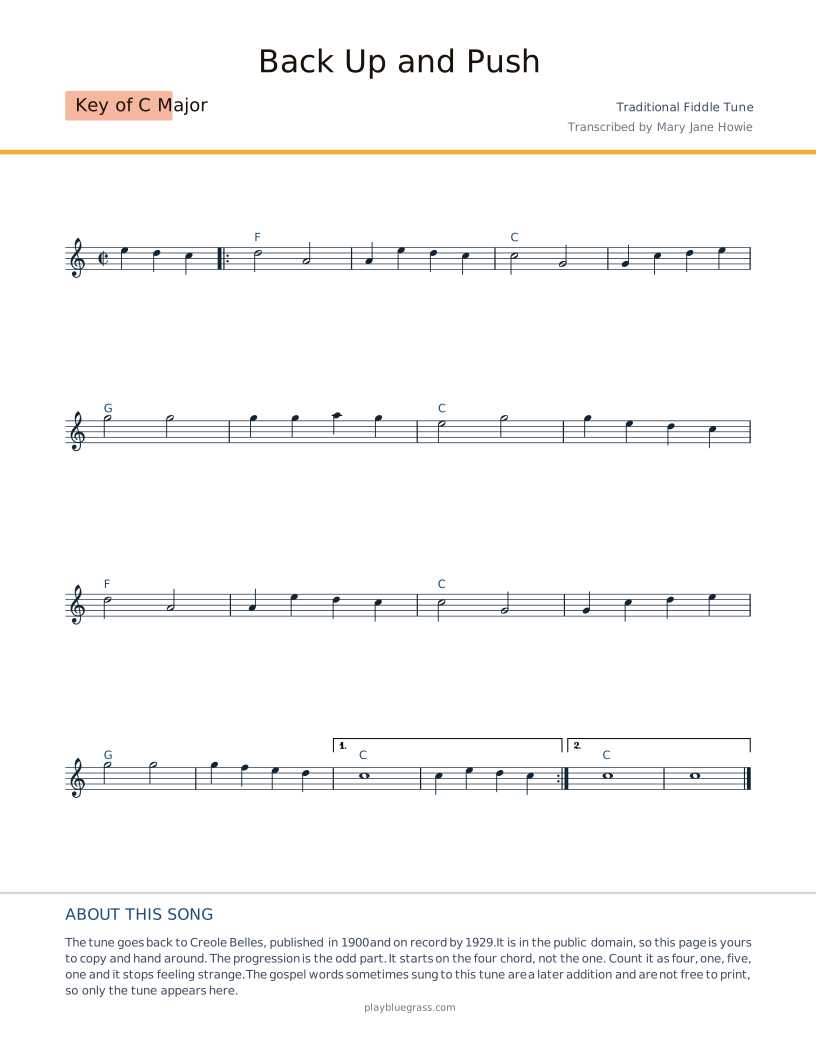
Back Up and Push starts in the wrong place. Most tunes open on the 1 chord. This one opens on the 4, and that single choice is what makes it sound like a rag instead of a breakdown. Fiddlers and mandolin players lead it, and it has been in the repertoire since the 1920s.
Where it came from
The melody traces to “Creole Belles”, a ragtime piece by J. Bodewalt Lampe published in 1900. That parentage explains the feel. Ragtime was the popular music of the day, and string bands pulled it into the fiddle repertoire the way they pulled in everything else.
The tune reached records in 1929. The Augusta Trio cut it in Richmond, Indiana, and the Georgia Organ Grinders recorded it in Atlanta for Columbia, with Bert Layne and Clayton McMichen on fiddles and Lowe Stokes on organ. Gid Tanner’s Skillet Lickers followed in 1934. Bill Monroe recorded it as an instrumental for Bluebird in May 1942.
A separate vocal tradition grew on the same melody. Mississippi John Hurt sang it as “My Creole Belle,” and Woody Guthrie and others picked that up. That is a love song, and it has nothing to do with the gospel words that circulate under the Back Up and Push title.
How it works
The tune sits in C and runs on three chords. In Nashville numbers the progression is 4, 1, 5, 1, with each digit holding for two bars. In C that reads F, C, G, C. Starting on the 4 is the whole character of the tune, and a backup player who reaches for the 1 out of habit will be wrong from the first beat.
The form repeats twice through. Fiddle or mandolin states the melody, and the tune sits well under a flatpick once the opening chord stops feeling strange.
One note on rights
The tune is public domain. Lampe published the source melody in 1900, the early recordings date to 1929, and every database lists the tune itself as traditional. The free sheet music on this site covers the melody and is free to use.
The words are a different matter, and this page no longer prints them. Back Up and Push is an instrumental. A set of gospel verses circulates attached to the title, and those verses are an authored composition grafted onto an old tune, not folk material. Lyric databases credit Fred Herron, and a fiddler by that name recorded the tune for King Records in December 1947. Nothing points to publication before 1930, so there is no route to the public domain by age.
Videos
Michael Cleveland and Pete Wernick play Back Up and Push
Mile Twelve plays Back Up and Push
Back Up and Push hotel jam at SPBGMA 2023
Sources
The source melody is the Library of Congress copy of “Creole Belles” by J. Bodewalt Lampe, 1900. The tune’s traditional status and early recordings come from the Traditional Tune Archive and SecondHandSongs, which files the work as traditional. The Fred Herron recording is listed in Praguefrank’s country discography.